
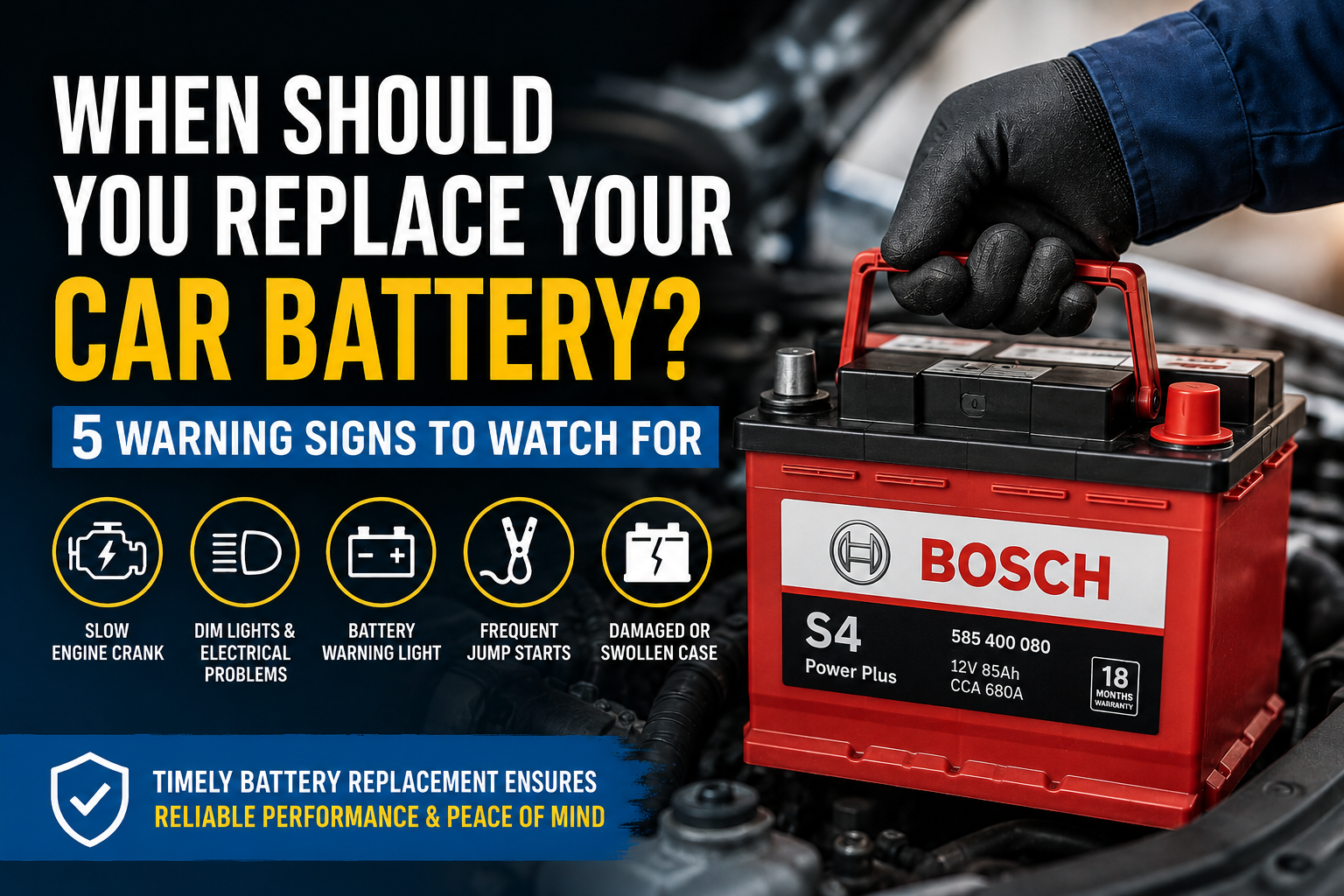
When Should You Replace Your Car Battery? 5 Warning Signs to Watch For
Your car battery is an important part of your vehicle. It helps start the engine and powers electrical components such as headlights, power windows, the music system, air conditioning, and dashboard lights. Every car battery has a finite useful life, and ignoring the early warning signs can leave you with unexpected problems.
A weak or dead battery can leave you stranded at the most inconvenient time. Timely battery replacement can help prevent starting problems, unexpected breakdowns, and electrical issues while ensuring reliable vehicle performance.
Why Does a Car Battery Need to Be Replaced?
Your car's battery powers essential electrical systems and provides the energy needed to start the engine. Over time, the battery can gradually lose its ability to hold a charge, making it harder to start your vehicle.
Most car batteries typically last around 3 to 5 years, although their lifespan can vary depending on usage, environmental conditions, driving habits, and maintenance.
Extreme temperatures, frequent short trips, and poor battery maintenance can shorten battery life. Before replacing your battery, it is advisable to have it checked by a reputable battery service provider. Specialised testing equipment can determine whether the battery is still performing properly or needs replacement.
Let's Understand When It's Time to Replace Your Car Battery
1. Slow Engine Crank
If your engine takes longer than usual to start, it could be a sign that your car battery is losing its performance. You may notice that the engine cranks slowly or takes several extra seconds to start.
This is one of the most common signs of a weak battery because the battery may no longer be providing enough power to start the engine efficiently. The problem can often be more noticeable when starting the vehicle in the morning.
2. Dim Headlights & Electrical Problems
Weak headlights or dim interior lights can indicate that your battery is struggling to provide sufficient power, particularly when the engine is switched off or when starting the car.
Problems with electrical components such as power windows, seats, or other accessories may also indicate a battery or charging-system issue. However, these symptoms can sometimes be related to the alternator, so proper testing is important.
3. Battery Warning Light on the Dashboard
If a battery-shaped warning light appears on your dashboard, it may indicate a problem with the battery or the vehicle's charging system. It could mean that the battery is not being charged properly or that another part of the electrical system requires attention.
A battery warning light does not necessarily mean that the battery itself needs replacement, but it should never be ignored. A professional inspection can help identify the actual cause.
4. Frequent Jump Starts
If you find yourself needing to jump-start your car more often than usual, the battery may not be holding a charge properly. Although a jump start can get the vehicle running temporarily, frequent jump starts usually indicate a problem with the battery or charging system.
It is advisable to have the battery and charging system tested to determine whether the battery needs to be replaced.
5. A Damaged or Swollen Battery Case
If the battery is visible and accessible, inspect it for signs of physical damage. A battery that appears swollen, cracked, leaking, or otherwise damaged requires immediate inspection.
Overheating or overcharging can cause a battery case to swell. A damaged battery may need to be replaced to prevent further problems.
How to Extend Your Car Battery Life?
- Do Not Overload Electronic Gadgets When the Engine Is Not Running: Excessive use of lights, music systems, or other electrical devices while the engine is off can drain the battery.
- Park Your Car in the Shade During Extreme Heat: Excessive heat can affect battery performance and shorten its lifespan. Parking in a shaded or covered area can help reduce heat exposure.
- Have Your Battery Tested Annually After Two Years: Testing your battery once a year after two years of use can help identify a decline in performance before it causes a starting problem.
- Keep the Alternator Working Properly: The alternator charges the battery while you drive. A charging-system problem can put additional strain on the battery and shorten its lifespan.
How Much Does a Battery Replacement Cost?
The cost of replacing a car battery depends on factors such as the make and model of the vehicle, the battery type, and its specifications. In India, a standard car battery may commonly cost around ₹3,000 to ₹10,000, while batteries for hybrid vehicles can cost significantly more.
It is always advisable to check your vehicle's battery requirements and choose a battery that is compatible with your car rather than selecting one based on price alone.
Conclusion
Your car battery plays an essential role in starting the engine and powering the vehicle's electrical systems. While a typical battery may last around 3 to 5 years, proper care and regular testing can help maximise its useful life.
If your battery is several years old, frequently requires jump starts, causes electrical problems, or shows visible signs of damage, it is a good idea to have it professionally checked and replaced if necessary.
Frequently Asked Questions
Most car batteries typically last around 3 to 5 years. However, the actual lifespan depends on driving habits, climate, usage, maintenance, and the condition of the vehicle's charging system.
Yes. A weak battery can often be recharged if it is still in good condition. However, an old or damaged battery may no longer hold a charge and may need replacement.
If your car refuses to start, the engine does not crank, or electrical components stop working properly, the battery may be dead or severely discharged. A battery test can confirm its condition.
Yes. A faulty alternator can prevent the battery from receiving the correct charge while the vehicle is running. This can reduce the performance and lifespan of even a new battery.
Not necessarily. A three-year-old battery may still be in good condition. Regular battery testing can help determine whether it is performing properly or approaching the end of its useful life.